

Why Self-Storage Keeps Holding Up
Summarized from the Journal of Property Management, IREM, Issue 3, 2026
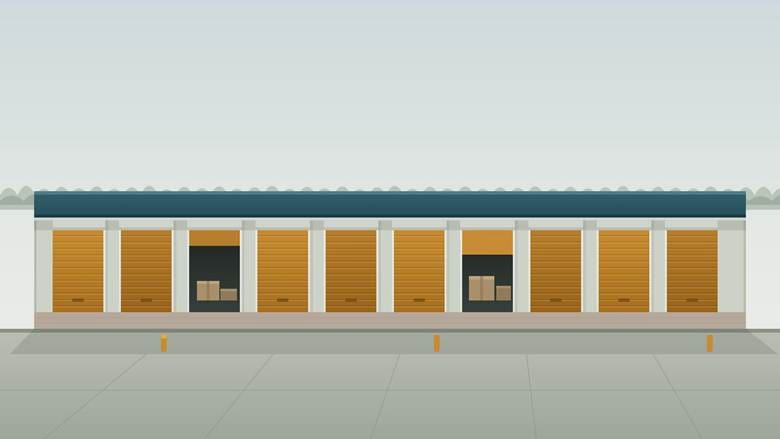
Commercial real estate has been on a rough ride since 2020. Office is still working through a demand problem it did not choose. Retail has been repriced twice. Industrial went from darling to selective almost overnight.
Self-storage just kept renting units.
A recent piece in the Journal of Property Management, IREM’s magazine, Issue 3, 2026, walks through why. It is worth a read if you own, manage, or lend on this asset class, and here is the short version.
The demand story changed shape
There are now more than 50,000 self-storage facilities operating in the United States, according to the Self-Storage Association, and demand has stayed steady.
What is interesting is why. The pandemic-era surge was moving activity: people relocating, downsizing, reshuffling. That was always going to fade. What replaced it is more durable.
Pascal Souvenir, who heads self-storage at Heitman, describes customers who once rented for three months during a move now treating storage as a standing arrangement, a lifestyle choice rather than a transition. With home sales still below their pandemic-era peak and affordability strained, people are parking their things somewhere while they wait out the housing market.
That shift matters more than it sounds. Longer stays mean less churn. Move-ins across Heitman’s portfolio have softened over the past two years, but because tenants stay longer, the rent roll holds up anyway. A slower top of the funnel is survivable when the bottom of it stops leaking.
The four Ds
Bret Richardson, director of asset management at Hunt Midwest, offers the industry’s blunt shorthand for where demand comes from: “divorce, displacement, disaster and death.”
Grim, but it explains the resilience. Storage demand is not tied to one economic condition. It comes from relocations, downsizing, estate settlement, business inventory, contractors, RV and boat owners. Richardson notes that at some properties roughly 10% of tenants are storing materials or work vehicles for a business.
Seasonality is still real. Summer is leasing season, driven by students and movers, but the base is broad.
An unusually simple asset to run
This is where self-storage separates itself from multifamily, office, and retail.
Staffing is lean: often a manager and an assistant manager on site, and that is the whole payroll. The largest operating expense is property taxes, not labor.
Turnover is cheap and fast. Souvenir’s line is that you need a broom and a mop, not a construction crew. A unit can be ready to re-lease within thirty minutes. Compare that to a multifamily turn, or a suite that needs a tenant improvement allowance.
And the leases are month-to-month, which is a hedge most property types do not have. When costs rise, operators can mark to market almost immediately rather than waiting out a five-year term.
Richardson does add a caution worth repeating: payroll is a small share of expenses, so cutting corners there is a false economy. Pay the district manager well. The difference between an engaged manager and a disengaged one shows up in the numbers.
Technology is now table steaks
Online leasing, automated gate access, dynamic pricing, and digital customer management have moved from differentiators to baseline expectations. Richardson says online leasing is now the main driver of new rentals.
Security has climbed the list too, as tenants store more valuable belongings: cameras, Bluetooth access, elevator and door access codes, and at some properties in-unit monitoring that alerts a tenant if motion is detected inside their unit.
The operators doing this well are not going fully digital. Some customers want to sign on their phone at midnight. Others want to walk into the office and talk to a person. The point is to be available either way.
The honest caution
None of this makes the sector a sure thing right now.
Richardson is direct about oversupply in certain markets after the development wave of the past several years, and about timelines stretching. Lease-up that ran roughly three years during COVID is now closer to five. If you are underwriting new development, that difference will decide whether the deal works.
Souvenir’s advice for anyone entering the sector is to partner with an experienced operator or advisor and set realistic expectations going in.
What I take from it
For those of us who value these properties, the article is a useful reminder that self-storage income streams behave differently than the rest of the commercial world. Short leases, low fixed costs, and fast turnover mean the asset reprices quickly in both directions. That is a real advantage in an inflationary stretch, and a real exposure when a submarket floods with new supply.
The two things I would want to know before signing anything: how deep the local development pipeline actually is, and what the lease-up assumption is. Five years is a very different proforma than three.
Summarized from “The self-storage solution,” Journal of Property Management (IREM), Issue 3, 2026, Volume 91, Number 3. Quoted comments are from Pascal Souvenir of Heitman and Bret Richardson of Hunt Midwest as reported in that article.