

When the Building Answers: What CBRE’s Call for Smarter Operations Means for Property Value in Northeast Ohio
In its October 2026 Our Take newsletter, the global commercial real estate firm CBRE published a column titled When You Tap Your Screen, a Building Answers. It was written by Emma Buckland, who leads CBRE’s Enterprise business and serves as Chief Operating Officer of its Building Operations & Experience segment. According to her CBRE profile, her Enterprise team includes more than 53,000 professionals managing more than 4 billion square feet for CBRE’s largest occupier clients (CBRE). Below is a summary of her argument, followed by what it means for property value in northeast Ohio.
What Buckland argues
Buckland’s central point is that a more digital economy makes physical buildings more important, not less. Every digital transaction, she writes, depends on physical infrastructure: data centers that need power and cooling, warehouses that move online orders, and offices that have to work the moment people arrive. The faster business becomes, the greater the consequences when a building fails.
Three findings stand out.
- Operations have become a top priority. Nearly half of the corporate real estate leaders CBRE surveyed this year ranked operational excellence among their top three priorities, up from about one in five in 2024. It is now the most common top priority, ahead of cost savings. Buckland cites CBRE Institute registration surveys from 2024 and 2026, with 377 and 471 respondents.
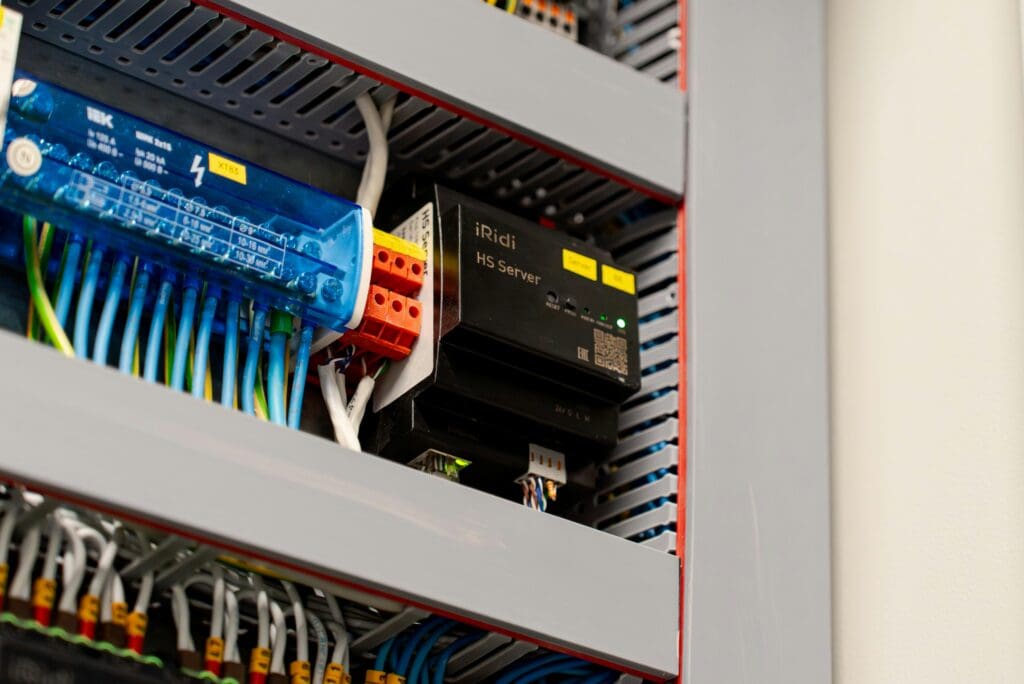
- AI changes how buildings are run. Buckland writes that most buildings still run the way they did two decades ago. She says AI is different this time for three reasons: it can work with the messy data portfolios already have, it can now resolve problems instead of just flagging them, and it can tie separate systems into one loop. At one bank CBRE serves, AI analytics cut alarm volume by 84%, so engineers see only what needs their attention.
- People still do the work. Buckland stresses that the last mile of facilities management is physical: a licensed, credentialed technician still has to fix the problem. With half of the facilities workforce projected to retire in the next decade, she argues that technology lets firms do more with the expertise they have.
She closes by describing a portfolio that works like a network. Badge swipes, for example, can tell portfolio teams how much space they need and tell cleaning and catering teams where to focus. Her measure of success is that no one notices the building at all, because it simply works (Buckland, CBRE).
How this affects value
Buckland writes for corporate occupiers and their service partners. For appraisers, lenders and owners in our market, the takeaway is that how a building is operated now influences its value in several distinct ways.
- Net operating income (income approach). Better operations show up in expenses. Predictive maintenance can lower repair costs, and occupancy data can trim cleaning, energy and service spending. When reviewing a building’s operating history, ask how it is maintained, not just what it cost last year.
- Capital expenditures and reserves. A building whose equipment is monitored and serviced before it fails may need smaller emergency reserves than one that runs until something breaks. Maintenance records and work-order history are worth requesting during due diligence.
- Obsolescence (cost approach). Buckland’s point that most buildings still run as they did twenty years ago is a description of functional obsolescence. Outdated building systems and controls that can’t share data are becoming a measurable gap, not just an inconvenience.
- Tenant demand and leasing risk. If operational excellence is now a top priority for corporate real estate leaders, buildings that work reliably should lease and renew more easily. Buildings with frequent outages or comfort complaints face more vacancy risk.
- Labor risk. If half the facilities workforce retires in the next decade, the cost and availability of skilled technicians becomes a factor in operating budgets. Buildings that are easier to maintain may be worth more to buyers who have to staff them.
The Northeast Ohio angle
Buckland’s argument lands in a market that is still working through a large supply of office space.
The office market. CBRE’s own Cleveland Office Figures Q3 2026 report puts total vacancy at 20.3%. Class A vacancy is 18.8%, Class B is 22.0% and Class C is 16.1%. Downtown is the weakest submarket, at 25.6%. The average asking rent is $19.57 per square foot, and net absorption was a positive 11,000 square feet for the quarter (CBRE).
What this means locally. With one in five office spaces empty, Cleveland tenants have choices. In a market like this, a building that simply works, as Buckland describes it, has an edge in keeping tenants. Class B buildings, with the highest vacancy rate, have the most to gain or lose from how well they are run.
Buildings that can’t compete are leaving the office market. Downtown Cleveland has become a national example of office-to-residential conversion. About 6.6 million square feet of downtown office space has been converted or is being renovated since 2013, delivering nearly 4,000 housing units (Propmodo). The same report shows what happens to buildings left behind: 1100 Superior Avenue, a 576,500-square-foot tower, sold for about $8.1 million after reverting to its lender, after selling for $47 million less than two decades earlier (Propmodo).
For appraisers, that spread is a reminder that office values in this market are driven by more than location. A building’s systems, operations and adaptability can decide whether it competes for tenants, converts to another use, or trades at a steep discount.
The bottom line
Buckland’s column is a reminder that buildings are judged by whether they work. In northeast Ohio, where office vacancy is above 20%, that standard is becoming part of how buildings hold value. When valuing a property, treat its operations, maintenance history and building systems as factors that affect NOI, reserves, obsolescence and leasing risk.
Sources
- Buckland, Emma. When You Tap Your Screen, a Building Answers. CBRE Our Take newsletter, October 2026. (Email newsletter; no public web version found.)
- CBRE. “Emma Buckland.” CBRE people profile.
- CBRE. “Cleveland Office Figures Q3 2026.” October 9, 2026.
- Barrington, Travis. “Cleveland’s Office Conversion Boom Is No Longer an Experiment. It’s the Blueprint.” Propmodo, February 19, 2026.
This post is market commentary, not an appraisal of any property.