

Data centers — the asset class is being redefined in real time
MSCI’s inaugural State of Private Markets 2026 outlook is, on its face, a report for institutional allocators — pension funds, sovereign wealth funds, and the GPs who manage their capital. The dataset spans $17.3 trillion in private investments across 28,000 funds. The audience is people deciding whether to commit a few hundred million dollars to a buyout fund or an evergreen private-credit vehicle.
But under the surface, the report is about something every commercial appraiser working in 2026 should recognize immediately: what happens when an asset class that was built on opacity is suddenly asked to deliver public-market transparency. That collision is the central story of the report, and it parallels — almost line-for-line — the AO-41 and UAD 3.6 story we’ve been tracking in residential and commercial valuation. The vocabulary is different. The dynamics are the same.
Here’s what’s worth pulling out for our audience.
The private real estate story is genuinely bad — and it’s been bad for four years running
The headline most appraisers will want first: private real estate posted just 2.0% in 2025, the weakest of any real-asset strategy for the fourth consecutive year. That follows –6.1% in 2023 and –2.7% in 2024. Q4 2025 came in slightly negative again. By MSCI’s read, this isn’t a one-quarter wobble — it’s a structural reset that began with the 2021–2022 interest-rate spike and has not fully cleared.
For context, infrastructure returned 12.8% in 2025, private credit 9.8%, and venture capital staged a 22% comeback. Private real estate is the laggard of the laggards. The MSCI piece notes that even within private markets, the gap between leaders and laggards widened in 2025 — and real estate is firmly on the wrong side of that gap.
This matters for Northeast Ohio practitioners because it sets the institutional capital context for everything in our Cleveland and Akron submarket reports. When Marcus & Millichap’s Cleveland forecast notes private buyers driving most transaction activity while institutional capital pulls back, the MSCI return data tells you why. Institutions aren’t returning to traditional CRE quickly. They’re putting incremental dollars somewhere else.
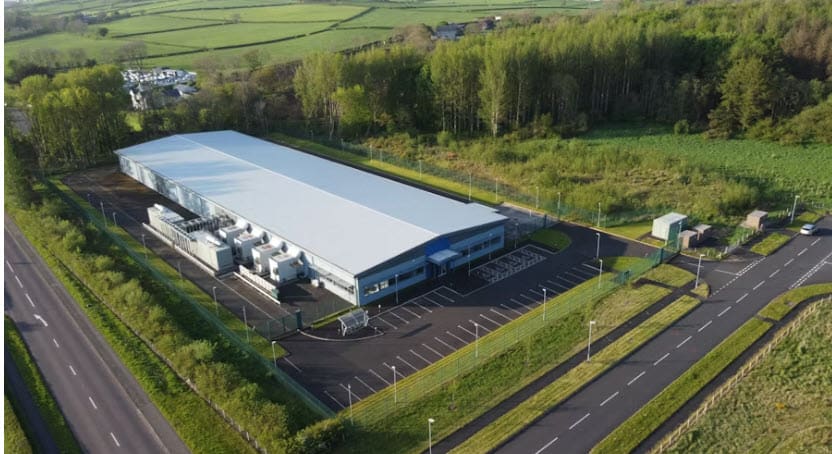
The “somewhere else” is data centers — and the asset class is being redefined in real time
The single most consequential section of the report for commercial appraisers is the data-center analysis. Three findings worth quoting in your head as you read:
1. Scale. Global data-center construction starts hit 27 gigawatts in 2025, up 46% year-over-year, requiring an estimated $341 billion in development expenditure. Standing-asset purchases added another $54 billion (+38% YoY). The pipeline of projects that haven’t broken ground yet exceeds 240 gigawatts. McKinsey estimates the decade’s data-center buildout will need $5–7 trillion in capital, with only about a quarter financeable from hyperscaler cash flow. The rest has to come from capital markets.
2. Returns. From Q2 2011 to Q3 2025, MSCI’s data-center research indexes returned 23.1–23.8% annualized — substantially outpacing global private equity (18.1%), private infrastructure (12.5%), and public equities (10.1%). Data centers have been the single best-performing real-asset segment of the past 15 years.
3. The asset class itself is changing. This is the part appraisers need to internalize: nearly half of data centers that broke ground in 2025 were classified “AI-ready,” meaning they support liquid cooling for high-density racks. MSCI’s framing is direct — data centers used to be real estate with servers, and they’re no longer that. The technical fit-out (electrical systems, advanced cooling, specialized mechanical engineering) now represents a large share of project value, and that infrastructure depreciates faster and more unevenly than the building shell itself.
For valuation work, two things follow. First, applying traditional industrial-building depreciation schedules to a modern AI-ready data center will produce systematically wrong answers — the technical infrastructure runs on a different obsolescence cycle than the structure. Second, an older data center that lacks future-proofed cooling design carries a real obsolescence risk that goes beyond standard functional obsolescence framings. The MSCI report flags this explicitly as a growing investor concern. It should be a growing appraiser concern, too.
This connects directly to last week’s coverage of the Appraisal Institute 2026 Annual Conference session on data-center appraisal in the GenAI era led by Dr. David Chudzik of Colliers. The MSCI data is exactly the empirical backdrop that makes specialized data-center valuation training non-optional for any commercial appraiser whose territory includes a tech corridor — and that increasingly means Northeast Ohio, where the Cleveland and Columbus corridors have been on every national data-center site-selection list for the past 18 months.
Data centers no longer fit one asset-class box. Neither does private credit. Both have a valuation-credibility problem.
MSCI’s “Theme Five” makes a point that translates almost perfectly into appraisal practice: fund classifications no longer describe what investors actually own. Data-center investments span infrastructure, real estate, private equity, and even private credit funds — depending on whether you’re buying the building, the operator, the equipment, or the loan against any of the above. Private credit funds, similarly, carry meaningful equity exposure as loans restructure into equity positions. A “senior direct lending” fund is no longer just a senior direct lending fund by the time it’s three years old.
The valuation parallel is sharp. When an asset’s classification stops describing what’s actually inside it, the conventional comps and cap-rate ranges associated with that classification stop being reliable inputs. MSCI’s recommended response — a factor-based, deal-level lens rather than fund-classification heuristics — is precisely the move AO-41 is pushing appraisers toward at the asset level. Look at the property’s actual cash-flow risk drivers and tenancy structure, not just its NAICS designation or building-type label.
The NAV credibility crisis is the appraisal accuracy crisis, in different clothing
The most consequential section of the MSCI report for anyone thinking about valuation methodology is the discussion of evergreen funds and NAV credibility. The summary, paraphrased:
For decades, private-equity and private-credit funds reported NAVs quarterly with a delay — those NAVs were essentially cosmetic, because LPs couldn’t actually transact at them. The accuracy didn’t matter operationally. But evergreen funds, which now hold over $500 billion in assets and grew more than 30% year-over-year, allow periodic redemptions at the manager-stated NAV. Suddenly the accuracy of those marks is not academic — it determines who profits and who loses when an investor enters or exits.
The result: when investors lost confidence in unlisted BDC NAVs in early 2026 (following Anthropic’s January Claude Cowork announcement that spooked software lenders), redemption queues formed and gates went up. MSCI’s empirical work suggests buyout funds may now be approaching overvaluation based on the gap between manager marks and realized exit prices.
Strip out the institutional vocabulary and this is the appraisal accuracy story. AO-41’s competent-reliance principle, UAD 3.6’s structured data requirements, AVMetrics’ commentary on appraiser responsibility when relying on AVMs — all of these are the residential and commercial equivalent of the same dynamic MSCI is documenting at the fund level. Valuations that were once advisory become transactable. When they become transactable, their credibility becomes existential.
For commercial appraisers, the practical implication is that the audience reading our reports in 2026 is a more demanding, more skeptical, more total-portfolio-minded one than the audience that read them in 2020. Institutional capital is bringing public-market expectations into every asset they touch. That’s not a residential lending story — it’s a fundamental shift in how capital evaluates the work we do.
The “buying high, exiting higher” pattern is everywhere
One more finding worth carrying into local market work: MSCI reports that buyout exits in 2025 reached a median 13.2x EBITDA — the highest in over a decade — even as overall exit activity stayed muted. The deals that get done are commanding meaningful premiums. Quality assets are still attracting buyers; lower-quality ones are sitting.
This is the institutional version of what we’ve been documenting in Northeast Ohio. The 142 Goodyear Boulevard sale in Akron at $399/SF (against a submarket average of $76/SF). Newer Cleveland distribution buildings transacting at or above $100/SF. The 2025 industrial pipeline in Akron concentrated among a small number of named developers and tenants. In stalled markets with limited deal flow, the few transactions that close skew dramatically toward the highest-quality assets — and that skews comp sets in ways that demand explicit recognition in our reports, not silent inclusion.
What to do with this
Three concrete takeaways for the NEO appraiser audience:
- For any data-center or data-center-adjacent assignment, the standard “industrial property” comp set is now likely to mis-state value in both directions. Modern AI-ready facilities are different assets than 10-year-old retail colocation buildings, even at similar SF totals. The MSCI data quantifies just how different.
- For institutional engagement letters, expect the total-portfolio framing MSCI is pushing to start showing up in scope-of-work language and reporting requirements. Clients increasingly want commercial appraisals that fit into a broader risk framework, not just a value opinion.
- For the regulatory thread, the MSCI report is the strongest single piece of evidence I’ve seen this year that the AO-41 / UAD 3.6 transparency agenda is not a residential-mortgage idiosyncrasy. It’s a market-wide shift in how capital expects valuations to work. Commercial appraisers who treat AO-41 as a residential issue will be caught flat-footed when their commercial clients start asking the same questions.
The MSCI report’s conclusion frames all of this as the maturation of private markets. From the appraiser’s seat, it reads more specifically: the era of valuations that don’t have to defend themselves is ending across every asset class. Better to be early to that than late.
Sources
- MSCI, The State of Private Markets 2026: Building for what’s next (inaugural outlook, May 2026)
- Marcus & Millichap — 2026 Cleveland Industrial Investment Forecast — referenced for institutional capital context
- Cushman & Wakefield AI Impact Barometer — referenced for AI-driven demand framing
- Appraisal Standards Board — Advisory Opinion 41 — the parallel competent-reliance regulatory thread
- AVMetrics — AO-41 and the Real Technology Question — appraiser-responsibility framing
- Appraisal Institute 2026 Annual Conference — Data Center Appraisal in the GenAI Era — practitioner training resource